
- All
- Product Name
- Product Keyword
- Product Model
- Product Summary
- Product Description
- Multi Field Search
Views: 220 Author: sofa-parts Publish Time: 2025-02-19 Origin: Site


Content Menu
● Why Proper Attachment Matters
● Choosing the Right Table Legs
● Step-by-Step Guide to Attaching Table Legs
● Step 1: Gather Tools and Materials
● Step 2: Measure and Mark Leg Placement
● Step 3: Pre-Drill Pilot Holes (If Necessary)
● Maintaining Stability Over Time
● FAQ:
>> Citations:
Creating a table from scratch or revitalizing an old one can be a very fulfilling DIY project. A crucial step in this process is attaching the table legs properly. The legs ensure stability, durability, and a refined appearance, enhancing the overall design10. This guide provides comprehensive instructions for securely attaching wood table legs, whether you're using hairpin legs or solid wood legs10.
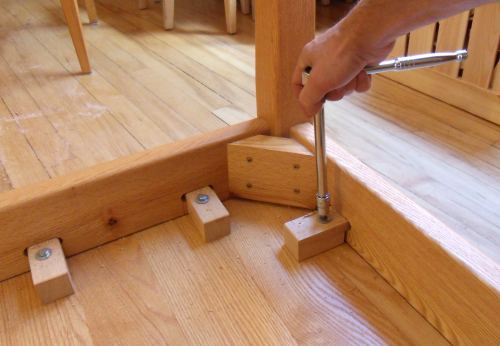
Attaching table legs correctly is essential for safety and aesthetics10. A secure attachment ensures the table's stability and prevents accidents or injuries10.
Safety is paramount in any woodworking project10. Tables are used for various activities, from dining to supporting heavy items. If the legs aren't firmly attached, the table could collapse or become unstable, leading to potential hazards10. Therefore, ensuring that table legs are securely attached and suitable for the intended use is crucial for safety10.
Selecting the appropriate table legs depends on the project requirements10. Consider the table's design, intended use, and desired style. Options include:
Hairpin Legs: Offer a modern, minimalist look and are easy to attach10.
Wooden Legs: Provide a classic, traditional feel and can be customized to match the tabletop10.
Metal Legs: Offer industrial or contemporary aesthetics and are known for their strength11.
Several methods can be used to attach table legs, each with its own advantages9. The choice depends on factors such as the table's design, weight, and intended use10.
Direct Screw-In Method: Simple and reliable, this involves directly screwing the legs into pilot holes on the table's underside9. It's ideal for DIY enthusiasts due to its simplicity and effectiveness9.
Hanger Bolt and Nut: Provides a secure connection for heavier tables9. A hanger bolt is screwed into the leg, and a nut fastens it to the table, ensuring stability9.
Brackets and Plates: Metal brackets or plates are affixed to both the table and legs, distributing weight evenly9. This method suits larger, heavier tabletops or designs that don't allow direct screwing9.
Dowel Joint: Involves inserting wooden dowels into aligned holes in both the leg and table9. It creates a strong, hidden bond without external hardware, ideal for medium-weight tables and a clean finish9.
Corner Brace: Practical and straightforward, L-shaped metal brackets are fitted to the corner where the leg meets the tabletop, providing additional support39.
Follow these steps to securely attach table legs to your table10.
Depending on the chosen method, gather necessary tools and materials9. These may include:
Table legs10
Wood screws5
Drill1
Screwdriver7
Measuring tape8
Pencil8
Carpenter's square8
Pilot hole drill bit5
Hanger bolts and nuts (if using)9
Brackets or plates (if using)2
Wood glue3
Dowels (if using)3
Clamps7
Measure and mark the precise locations on the underside of the tabletop where the legs will be attached8. Accuracy is crucial for balance and stability9. A common recommendation is to position the legs about 5cm (approximately 2 inches) from the table's edge10.
For hardwoods, pre-drilling pilot holes eases screw insertion and reduces the risk of cracking5. Use a drill bit slightly smaller than the screw diameter8.
Direct Screw-In Method: Align the legs with the marked locations and drive wood screws directly into the tabletop through the pre-drilled pilot holes9. Ensure the legs are evenly tightened to maintain stability10.
Hanger Bolt and Nut Method: Screw the hanger bolts into the legs. Align the legs with the marked locations and attach them to the table using nuts9. Tighten the nuts to secure the legs9.
Brackets and Plates Method: Affix the brackets or plates to the legs and the underside of the table2. Align the legs with the marked locations and screw the brackets or plates into place2.
Dowel Joint Method: Drill holes in both the legs and the tabletop for the dowels3. Apply wood glue to the holes and insert the dowels3. Clamp the legs in place and allow the glue to dry overnight7.
Corner Brace Method: Position the corner braces where the legs meet the tabletop3. Screw the braces into both the legs and the table3.
Once the legs are attached, flip the table upright and check for stability10. Gently rock the table to ensure it doesn't wobble10. If wobbling occurs, double-check the attachment points and tighten any loose screws10.
Wooden Tabletops: Threaded inserts can be used if the legs need to be assembled or disassembled multiple times10. Use an M5 bolt or 5mm threaded insert to fit into the legs' 6mm hole, allowing room for wood expansion and alignment10.
Glass or Acrylic Tabletops: Use specialized adhesives designed for these materials10.
Heavy Stone or Concrete Tabletops: Consult a professional or use heavy-duty attachment methods to withstand the extra weight10.
Regular Inspections: Periodically check the table legs for any signs of looseness or damage10.
Tighten Connections: If any connections are loose, tighten the screws, bolts, or nuts as needed10.
Avoid Overloading: Do not place excessive weight on the table, as this can strain the leg attachments10.
Protective Pads: Use protective pads under the legs to prevent scratches and reduce stress on the joints10.
By following these guidelines, you can confidently attach wood table legs, ensuring your table is safe, stable, and aesthetically pleasing for years to come10.

What is the best method for attaching table legs to a wooden tabletop?
The direct screw-in method is often the simplest and strongest for wooden tabletops910. Ensure you pre-drill pilot holes to prevent the wood from cracking5.
How far from the edge should I place the table legs?
It is generally recommended to place the legs about 5cm (2 inches) from the edge of the table for optimal stability and aesthetics10.
What type of screws should I use to attach table legs?
Use wood screws that are appropriate for the thickness of your tabletop5. For tables over 18mm thick, 4.5mm wood screws are generally suitable510. For larger or heavier tables, consider using 5mm wood screws for increased stability510.
How do I prevent my table from wobbling after attaching the legs?
Ensure that all legs are attached securely and evenly10. Check the attachment points and tighten any loose screws10. If the table still wobbles, you may need to adjust the leg placement or use shims to level the legs10.
Can I use glue in addition to screws when attaching table legs?
Yes, using wood glue in addition to screws can provide an even stronger and more durable connection, particularly for methods like dowel joints3.
https://www.reddit.com/r/woodworking/comments/9azhg8/what_sort_of_joinery_is_best_for_table_legs/
https://www.thehairpinlegcompany.co.uk/blogs/blog/how-to-attach-wooden-table-legs
https://ask.metafilter.com/189803/How-to-reattach-a-table-leg
https://flowyline.com/blogs/for-diy-ers/how-to-attach-legs-to-a-table-without-apron
https://www.thehairpinlegcompany.co.uk/blogs/blog/best-way-to-connect-table-legs
https://www.thehairpinlegcompany.co.uk/blogs/blog/how-to-attach-table-legs
https://www.simplifiedbuilding.com/projects/how-to-attach-table-legs
https://www.reddit.com/r/woodworking/comments/1829f2j/how_would_you_attach_these_legs/
https://www.reddit.com/r/woodworking/comments/8qa7uo/best_hardware_for_attaching_table_legs/
https://www.reddit.com/r/woodworking/comments/7yyfh5/joinery_methods_for_attaching_a_table_top/
https://www.reddit.com/r/woodworking/comments/7dchl5/what_is_the_strongest_way_to_attach_legs_to_a/
https://www.reddit.com/r/woodworking/comments/1hlavex/help_attaching_table_legs/
https://www.reddit.com/r/woodworking/comments/53yvwd/how_to_attach_box_legs_to_tableframe/
https://www.reddit.com/r/woodworking/comments/dr702h/what_is_the_best_way_to_attach_table_legs_and/
https://www.tablelegs.com/blog/8-easy-ways-to-attach-table-legs/
https://knappconnectors.com/simple-ways-to-attach-table-legs-to-your-wooden-table/
https://woodworking.stackexchange.com/questions/2821/attaching-legs-to-a-table
https://www.semanticscholar.org/paper/66ff99fa74d868add66920229d82554c004b5066
https://www.semanticscholar.org/paper/346d0f6b050f81e2e814c2deffc72522815da98e
https://www.semanticscholar.org/paper/ed71475323367f1e5de03788e7603091e35de13f
https://www.semanticscholar.org/paper/8a6b48772ee44e98edcfe1b6ba33c82b8c161c75
https://www.reddit.com/r/woodworking/comments/vcmroi/can_i_attach_coffee_table_legs_to_plywood/
https://www.reddit.com/r/woodworking/comments/nzm0ln/help_attaching_legs_to_34_dining_table/
https://www.reddit.com/r/woodworking/comments/2vjtni/how_to_attach_removable_table_legs/
https://www.reddit.com/r/DIY/comments/zx691z/easy_and_cheap_way_to_reinforce_my_table_legs_to/
https://www.reddit.com/r/Woodworkingplans/comments/1gtktyn/how_to_attach_legs_to_shelf/
https://www.reddit.com/r/woodworking/comments/b8lvo4/proper_way_to_attach_dining_table_legs_to_the/
https://www.thehairpinlegcompany.co.uk/blogs/blog/diy-wooden-table-legs
https://www.pinterest.com/ideas/attaching-legs-to-table-diy/949025519283/
https://www.semanticscholar.org/paper/981694ef1f8dd1674901b2bd96268a2247d6ab36
https://www.semanticscholar.org/paper/2661a2cd45f74f577eefd1742c6244c7086f7bb8
https://www.semanticscholar.org/paper/445db1584c9b7f249e5d5a895f1c2ce9b4694eaa
https://www.semanticscholar.org/paper/918ae7db832f2635c287eda3d594d27602554a8a
https://www.reddit.com/r/BeginnerWoodWorking/comments/1f90jeb/help_with_leg_attachment/
https://www.reddit.com/r/DIY/comments/zzhwt4/building_a_desk_installing_the_legs_how_close_to/
https://www.reddit.com/r/woodworking/comments/15753pu/adding_washers_to_these_table_legs_question/
https://www.reddit.com/r/woodworking/comments/13e9y7n/question_on_attaching_legs_to_table/
https://www.reddit.com/r/woodworking/comments/4xxize/questions_about_attaching_a_wood_table_top_to/
https://flowyline.com/blogs/for-diy-ers/where-to-place-table-legs-for-stability
https://www.workshop.bunnings.com.au/t5/Whole-of-House/How-to-attach-desk-legs/td-p/212951
https://www.festoolownersgroup.com/building-materials/two-quick-questions-about-table-i'm-building/
https://woodweb.com/knowledge_base/Table_Leg_Attachment_and_Veneer_Details.html
https://www.tablelegs.com/blog/definitive-guide-removable-table-legs
https://www.woodtalkonline.com/topic/10334-new-diyer-needs-help-with-table-legs/


